Himalayan Rock Salt Crystals: Why Are They Pink?
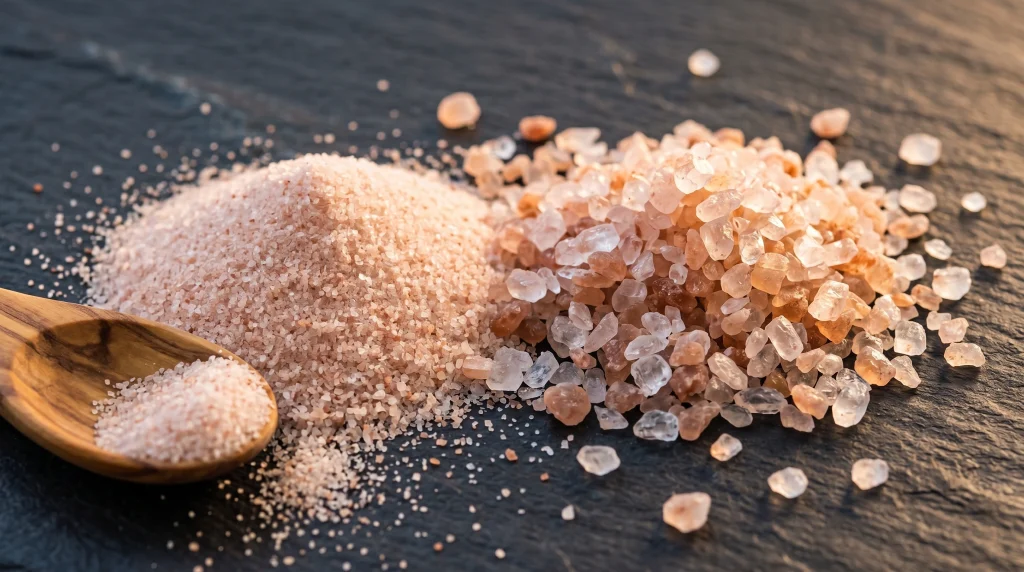
If you’ve ever seen Himalayan salt, you’ve probably noticed its beautiful shades—light pink, deep rose, even orange. Unlike regular white salt, these crystals look almost decorative.
But this colour is not artificial. It’s completely natural and formed deep within the Earth over millions of years. The pink hue comes from tiny traces of minerals embedded inside the salt crystals—especially iron compounds that interact with oxygen.
Think of it like this: just as iron rust turns reddish, similar compounds inside the salt give it its pink appearance.
What Is Himalayan Rock Salt?
Himalayan rock salt is a type of natural, unrefined salt that is mined from ancient salt deposits.
Chemically, it is still mostly sodium chloride (NaCl)—just like regular table salt. In fact, about 97–98% of it is sodium chloride, with the remaining portion made up of trace minerals.
The key difference is that Himalayan salt is:
- Minimally processed
- Free from additives
- Rich in natural trace minerals
Because of this, it is often considered a more “natural” alternative to refined table salt.
Origin Of Himalayan Rock Salt
Himalayan salt comes primarily from the famous Khewra Salt Mine in Pakistan, located near the foothills of the Himalayas.
These salt deposits formed over 250 million years ago when ancient seas evaporated, leaving behind massive layers of salt. Over time, geological pressure transformed these layers into solid rock salt.
As tectonic activity pushed these deposits upward, they became part of the Himalayan region. Today, the salt is extracted by hand, preserving its natural structure and mineral content.
Why Is Himalayan Salt Pink?
The pink colour of Himalayan salt has a simple but fascinating scientific explanation.
Iron Oxide (The Main Reason)
The primary cause is iron oxide, the same compound we commonly call “rust.” When iron present in the salt reacts with oxygen over time, it forms this reddish compound.
Even very small amounts of iron oxide can significantly change the colour—just like a drop of dye colouring water.
Trace Minerals
Besides iron, Himalayan salt contains tiny amounts of:
- Magnesium
- Potassium
- Calcium
- Zinc
These minerals slightly influence the shade, giving variations from pale pink to deep red.
Natural Crystal Formation
Pure salt (halite) is actually colourless or white. The pink colour appears because these minerals are trapped inside the crystal structure during formation.
Colour Variations
Not all crystals look the same:
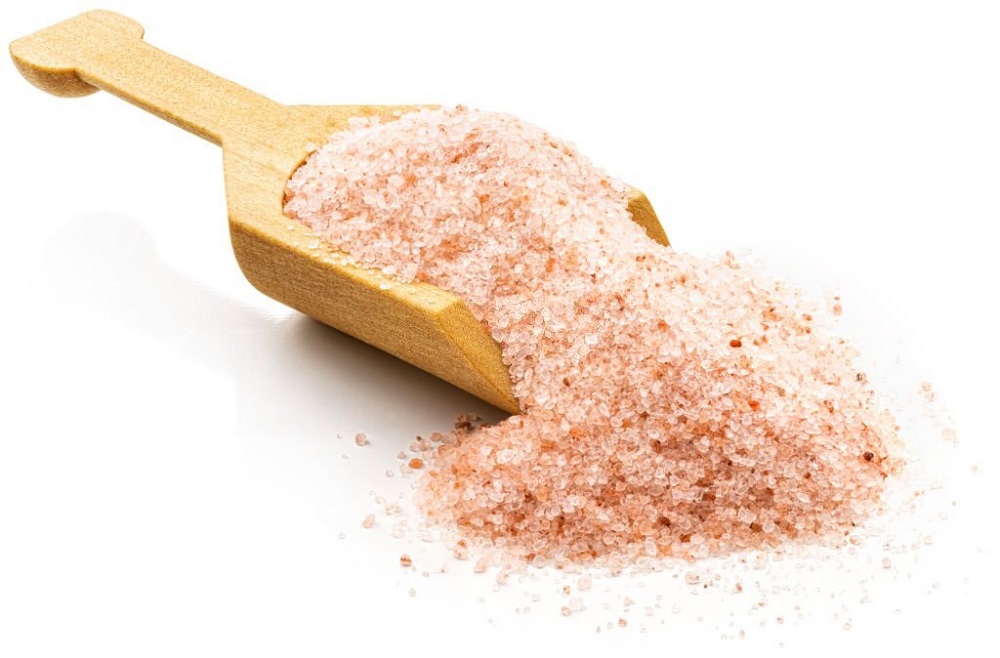
- Light pink → low iron content
- Medium pink → moderate minerals
- Deep red/orange → higher iron concentration
This variation is a sign that the salt is natural and unprocessed.
Does Pink Colour Make Himalayan Rock Salt More Beneficial?
This is where things get interesting—and often misunderstood.
✔ What’s True:
Himalayan salt does contain more minerals than regular table salt, including iron, calcium, and magnesium.
❌ What’s Overstated:
The amounts of these minerals are extremely small.
For example, you would need to consume an unrealistic amount of Himalayan salt to get meaningful nutritional benefits from these minerals.
⚖️ Scientific Reality:
- Both Himalayan salt and table salt are mostly sodium chloride
- Both have similar health effects
- The pink colour is mainly visual and aesthetic, not a sign of superior nutrition
Final Verdict:
The pink colour does not make Himalayan salt significantly healthier. It simply reflects the presence of trace minerals.
Himalayan Pink Salt Products
Himalayan salt is used in a wide range of products beyond just cooking:
- Edible Salt
- Fine salt for daily cooking
- Coarse salt for seasoning and finishing
- Salt Lamps
Blocks of Himalayan salt with a light inside, used for decoration and ambiance.
- Cooking Slabs
Large salt blocks used for grilling, serving, or chilling food.
- Bath Salts & Spa Products
Used in baths for relaxation and skincare (though scientific evidence is limited).
- Salt Caves & Therapy
Artificial salt rooms where people spend time for respiratory or wellness purposes (claims are still debated).
People Also Search For:
- Is Himalayan salt healthier than regular salt?
Himalayan salt does contain trace minerals like iron, magnesium, and potassium. However, these minerals are present in very small amounts, so they do not provide significant health benefits. In terms of overall impact on the body, Himalayan salt and regular table salt are quite similar, as both are mainly sodium chloride.
- Why is some Himalayan salt darker pink than others?
The colour variation depends on the amount of minerals, especially iron oxide.
- Light pink salt contains fewer minerals
- Darker pink or reddish salt contains more iron compounds
This variation is natural and shows that the salt is unrefined and minimally processed.
- Can Himalayan pink salt expire?
Himalayan salt does not expire because it is a natural mineral with no organic content that can spoil. If stored properly in a dry place, it can last indefinitely without losing its quality.
Conclusion
Himalayan salt’s pink colour is not mysterious—it’s simply the result of iron oxide and trace minerals trapped within the salt crystals over millions of years.
While it is natural, minimally processed, and visually appealing, its health benefits are often exaggerated. At its core, it is still salt, and should be consumed in moderation.
So, why is Himalayan salt pink?
Because nature added a tiny touch of iron—and millions of years did the rest.