


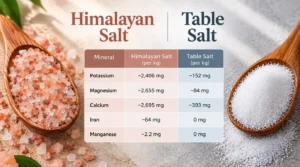
Himalayan Salt Minerals: Mineral List, Amounts, and Sodium Content
See which minerals Himalayan salt contains, how much of each is in a typical serving, and how its sodium content compares with table salt.

Salt may look like a simple kitchen ingredient, but not all salt is the same. Table salt, sea salt, kosher salt, rock salt, black salt, and Himalayan salt differ in their source, processing, crystal size, appearance, flavor, and common uses.
In this guide, we will explain the six major types of salt, how they differ, where each is commonly used, and which type may be the right choice for cooking, baking, seasoning, finishing dishes, and specialty applications.
The most common salt varieties include table salt, sea salt, kosher salt, rock salt, black salt, and Himalayan pink salt. Most culinary salts consist primarily of sodium chloride, while differences in processing, crystal structure, and naturally occurring trace substances can affect their appearance, texture, and taste.
Understanding these differences makes it easier to choose the right salt for a particular recipe or application.
What Is Table Salt?
Table salt is the fine-grained salt commonly found in household salt shakers. It is generally produced from underground salt deposits and undergoes refining to create small, uniform crystals. Many table salts are iodized, meaning iodine is added to help provide this essential nutrient.
Because its crystals are fine and consistent, table salt dissolves quickly and is easy to measure accurately. It may also contain an anti-caking agent to keep the crystals free-flowing.
Common Uses of Table Salt
Table salt is widely used for everyday cooking and baking. Its fine texture makes it suitable for soups, sauces, marinades, vegetables, meat, and doughs. It is also commonly used in processed foods and general seasoning.
What Is Sea Salt?
Sea salt is produced by evaporating seawater, leaving behind salt crystals. Depending on how it is harvested and processed, sea salt can range from fine grains to large flakes and may appear white, gray, or slightly colored.
Sea salt can retain small amounts of naturally occurring minerals and other substances from seawater. However, like other culinary salts, it is still primarily sodium chloride.
Common Uses of Sea Salt
Sea salt can be used in everyday cooking, seasoning, food preservation, and finishing dishes. Coarse or flaked varieties are particularly popular for sprinkling over salads, vegetables, meats, and baked foods where the texture of the crystals adds to the eating experience.
What Is Kosher Salt?
Kosher salt is known for its relatively large, coarse crystals. Despite its name, the term traditionally relates to its use in the koshering process rather than meaning that the salt itself has undergone a special religious blessing.
Its larger crystals are easy to pick up and distribute by hand. Kosher salt can be produced from mined salt deposits or seawater, depending on the product.
Common Uses of Kosher Salt
Kosher salt is popular for seasoning meat, poultry, vegetables, and other foods. It is also used for brining, pickling, curing, and general cooking.
One important difference is crystal density. Because kosher salt crystals are larger and leave more space between them, a teaspoon of kosher salt may contain less salt by weight than a teaspoon of fine table salt. Therefore, volume-for-volume substitutions may require adjustment.
What Is Rock Salt?
Rock salt is salt obtained from underground deposits and is typically recognized by its coarse, crystalline structure. These deposits formed from ancient bodies of saltwater that evaporated and were preserved underground over geological periods.
Himalayan pink salt is also a naturally occurring rock salt, although its distinctive pink color, origin, and mineral composition set it apart from ordinary rock salt. Himalayan salt is mined in Pakistan, particularly in the Punjab region.
It is important to distinguish food-grade rock salt from salt intended for industrial or de-icing applications. Not every rock salt product is suitable for consumption.
Common Uses of Rock Salt
Food-grade rock salt can be used for certain cooking, preservation, and specialty applications. Coarse salt is also traditionally used in homemade ice cream making because it helps lower the freezing point of the ice surrounding the ice cream mixture.
Rock salt is also used in various industrial applications, depending on its grade and specifications.
What Is Black Salt?
Black salt, commonly called Kala Namak, is a distinctive South Asian salt known for its characteristic sulfurous aroma and savory flavor. Despite the name, it is often pinkish-brown, purple-gray, or dark rather than completely black.
Kala Namak is particularly associated with Indian and South Asian cuisine. Its unusual aroma and egg-like flavor make it different from ordinary table salt and other common culinary salts.
Black salt should also not be confused with black lava salt, which is a separate type of finishing salt with a different origin and flavor profile.
Common Uses of Black Salt
Kala Namak is commonly used in chaat, raita, chutneys, fruit dishes, salads, and other South Asian recipes. It is also popular in vegan cooking because its sulfurous character can provide an egg-like flavor.
Its appeal is therefore mainly culinary: it adds a distinctive taste that ordinary salt cannot easily reproduce.
What Is Himalayan Pink Salt?
Himalayan pink salt, often described as pink rock salt, is a naturally occurring rock salt mined from ancient salt deposits in Pakistan’s Punjab region. Its characteristic pink, rose, or reddish tones come from naturally occurring trace minerals and other mineral impurities within the salt crystals.
It is available in a wide range of crystal sizes, from finely ground salt suitable for everyday cooking to coarse grains used in grinders and specialty applications.
How Is Himalayan Pink Salt Different?
Himalayan pink salt differs from refined table salt mainly in its geological origin, processing, crystal size, and appearance. Its natural pink color makes it visually distinctive, while different grain sizes provide flexibility for culinary and specialty uses.
However, Himalayan salt is sometimes described as containing 80+ minerals and trace elements, but the quantities present are generally small. These trace minerals should not be promoted as a significant nutritional benefit.
Common Uses of Himalayan Pink Salt
Himalayan pink salt is used for everyday cooking, seasoning, baking, food preparation, and finishing dishes. Coarser forms are also used in grinders, salt blocks, cooking slabs, salt lamps, and different salt products designed for specialty culinary applications.
Its combination of natural origin, distinctive color, and availability in different grain sizes has made it a popular choice for both household and commercial culinary applications.
Salt Type | Main Source | Appearance | Typical Texture | Common Uses |
Table Salt | Underground deposits | White | Fine | Cooking, baking, seasoning |
Sea Salt | Seawater | White, gray, or varied | Fine to coarse | Cooking, finishing, preservation |
Kosher Salt | Mines or seawater | White | Coarse/flaky | Seasoning, brining, curing |
Rock Salt | Underground deposits | White or naturally colored | Coarse | Food and specialty applications |
Black Salt | Mineral/processed salt | Pinkish-brown to dark | Fine to coarse | South Asian cuisine |
Himalayan Salt | Pakistan’s salt deposits | Pink to reddish | Fine to coarse | Cooking, seasoning, specialty uses |
Fine table salt or fine Himalayan salt can work well for soups, sauces, vegetables, meat, and general seasoning.
Fine-grain salt is usually easier to distribute evenly through dough and batter. Table salt or finely ground Himalayan salt can be suitable depending on the recipe.
Kosher salt is popular because its larger crystals are easy to distribute by hand. Coarse sea salt or Himalayan salt can also be used depending on the desired texture.
Coarse or flaked sea salt and coarse Himalayan salt can add both flavor and texture when sprinkled over finished dishes.
Black salt, particularly Kala Namak, is a natural choice when a recipe calls for its distinctive sulfurous and savory character.
Himalayan salt is widely used for cooking and serving blocks and other specialty culinary products because it can be formed into solid salt products.
In one important sense, yes: most culinary salts are primarily sodium chloride. Their differences are largely related to their source, processing, crystal size, shape, and trace components.
That does not mean they are interchangeable in every situation. A fine salt dissolves differently from a coarse crystal, while black salt has a distinctive flavor that makes it particularly useful in certain recipes.
It is also worth remembering that the amount of salt consumed matters more for health than choosing one fashionable variety over another. Claims that a particular specialty salt provides major health advantages should be treated carefully.
There is no single best salt for every purpose. The right choice depends on the recipe, desired texture, crystal size, flavor, and application.
Table salt is practical for everyday cooking and baking. Sea salt offers different textures and finishing options. Kosher salt is valued for its large crystals and versatility. Rock salt has specific food and specialty applications. Black salt provides a distinctive South Asian flavor, while Himalayan pink salt offers a natural rock-salt option in a variety of grain sizes and culinary formats.
Himalayan salt is a type of natural rock salt, but not all rock salt is Himalayan salt. Himalayan salt specifically refers to salt mined from deposits in the Himalayan/Punjab region of Pakistan and is recognized for its characteristic pink color.
Sea salt and table salt are both primarily sodium chloride. Although they can differ in processing and trace mineral content, these differences do not automatically make sea salt healthier.
Kala Namak is often called Himalayan black salt or Indian black salt, but it is different from black lava salt. Black lava salt has a different origin and culinary profile.
Yes, Himalayan salt can generally be used as a culinary salt in many recipes. However, the grain size should be considered because coarse crystals and fine table salt do not always measure the same by volume.
Not always. Kosher salt has larger, less-dense crystals, so a teaspoon of kosher salt can contain a different amount of salt than a teaspoon of fine table salt. Recipe adjustments may therefore be necessary.
It depends on the dish. Fine table or Himalayan salt works well for everyday cooking, kosher salt is convenient for seasoning, sea salt can work well for finishing, and Kala Namak is ideal when its distinctive South Asian flavor is desired.
The differences between salt varieties go beyond color. Their source, processing, crystal size, texture, and flavor determine how they perform in different culinary applications. Understanding these differences makes it easier to choose the right salt for the right purpose.
For businesses looking for food-grade Himalayan pink salt from Pakistan, Demaro Salt supplies Himalayan salt products for culinary, wholesale, export, and specialty applications, with options suited to different customer and product requirements.

CEO of Demaro Salt
See which minerals Himalayan salt contains, how much of each is in a typical serving, and how its sodium content compares with table salt.
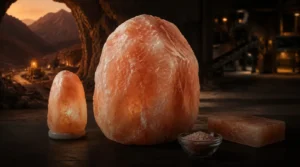
From sourcing to packaging, Demaro controls each step, plus private-label and sample options for buyers.
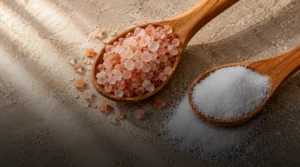
Rock salt versus regular table salt: where each comes from, how they are processed, and how they differ in texture, minerals, and use.
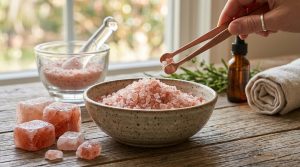
Beyond the colour: how mineral-rich pink salt earns its place in cooking, wellness and the home, and why demand keeps growing.
Why Demaro Salt
Tell us what you need. Our team replies within 24 hours.