


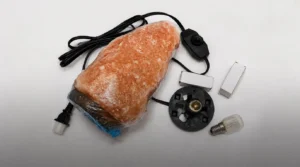
Is the Quality of a Salt Lamp Affected by the Type of Bulb Used?
The bulb drives both the glow and the heat that keeps a lamp dry. How wattage and type affect performance.

Rock salt is a naturally occurring form of salt found in underground deposits and extracted as solid mineral crystals. It is often associated with Himalayan pink salt, but the two terms are not exactly interchangeable: rock salt is a broad category, while Himalayan pink rock salt is a particular type of rock salt mined from Pakistan’s Salt Range.
In this blog, we will explain what rock salt is, how it forms, how it differs from regular table salt, and where Himalayan salt fits into the picture. We will also compare their source, processing, composition, appearance, texture, taste, and common uses so you can understand which type of salt is suitable for different applications.
In simple terms, what rock salt is made of comes down to sodium chloride crystals formed alongside naturally occurring trace minerals, which is why composition can vary from one deposit to another.
Its natural crystals can vary in size and color depending on the geological conditions and trace minerals present in the deposit.
Millions of years ago, ancient seas and inland bodies of water evaporated, leaving concentrated salt deposits behind. Over geological time, these deposits were buried beneath layers of rock and sediment.
Today, these underground salt beds can be mined and extracted as large pieces or crystals. The mined salt may then be crushed, screened, ground, or cut into different sizes according to its intended use.
Yes. Himalayan pink salt is a type of rock salt. It is mined from ancient salt deposits in Pakistan’s Salt Range, particularly from the Khewra salt mines, one of the oldest and largest salt mines in the world. Its characteristic pink, reddish, or orange tones come from minerals in Himalayan salt that occur naturally within the crystal structure.
So, while all Himalayan pink salt is rock salt, not all rock salt is Himalayan pink salt. Rock salt can be white, gray, pink, or other shades depending on its geological origin and mineral composition.
“Regular salt” usually refers to the refined table salt commonly used in everyday cooking and seasoning. It consists predominantly of sodium chloride and is processed to produce relatively uniform, fine crystals.
Depending on the product and market, table salt may also be iodized and may contain approved anti-caking agents to help keep the fine crystals free-flowing.
Rock salt and regular table salt have the same primary compound—sodium chloride—but they can differ considerably in how they are obtained, processed, and presented.
Understanding the difference between rock salt and table salt starts with how each is sourced and processed, as summarized below.
Feature | Rock Salt | Regular/Table Salt |
Source | Underground salt deposits | May come from mined deposits or seawater |
Processing | Often crushed, screened, or ground | More extensively refined |
Crystal size | Often coarse or irregular | Usually fine and uniform |
Color | Can range from white to pink or gray | Usually white |
Trace minerals | May retain naturally occurring trace minerals | Mostly refined sodium chloride |
Iodine | Depends on the product | Often added to iodized varieties |
Additives | Depends on the product | May contain anti-caking agents |
Common uses | Culinary and industrial applications | Everyday cooking and seasoning |
The most noticeable differences are not simply about the word “natural.” They come from the salt’s geological source, processing, crystal structure, and final specifications.
Rock salt is obtained by mining solid underground salt deposits. Himalayan pink salt, for example, comes from ancient salt deposits in Pakistan’s Salt Range.
Regular table salt can also originate from underground deposits, but it may undergo additional refining before reaching consumers. Other table salts are produced from seawater through evaporation and subsequent processing.
Mined rock salt may be mechanically crushed, screened, washed, or ground depending on its grade and intended application. Some products are sold in relatively coarse crystals, while others are processed into fine grains.
Table salt is generally refined to achieve a consistent crystal size, appearance, and purity. Some varieties are also fortified with iodine or contain anti-caking agents.
Therefore, “rock salt” does not automatically mean completely unprocessed, and “table salt” does not necessarily mean that it comes from one specific source.
Natural rock salt can also contain small quantities of other minerals and elements retained from its geological formation — this is the basis of the minerals in Himalayan salt that are often highlighted in marketing.
However, the exact mineral composition varies by deposit and product. The presence of trace minerals should not be interpreted as making one salt automatically nutritionally superior to another.
Table salt is usually white because refining removes most of the naturally occurring impurities and produces a consistent product.
Rock salt can have a wider range of appearances. Himalayan pink salt, for example, can range from nearly white to pale pink, deeper pink, orange, or reddish shades depending on the minerals present in the crystals.
Rock salt also commonly appears in larger or more irregular crystals, although it can be ground into fine grains for culinary use.
Crystal size affects how salt behaves when used. Fine table salt dissolves quickly because of its small particles, while coarse rock salt crystals generally take longer to dissolve.
Differences in mineral composition and crystal size can also produce subtle differences in texture and perceived flavor. However, both remain primarily sodium chloride, so the basic salty character is shared.
Himalayan pink salt is essentially a commercially recognized variety of natural rock salt from Pakistan. It is extracted from ancient salt deposits in the Salt Range and processed into different grades and formats.
Large mined crystals can be crushed into fine, medium, or coarse grains, while larger pieces can be used for products such as salt slabs and blocks. The natural color of Himalayan salt varies according to the mineral composition of individual deposits and crystals.
This is why the terms rock salt, Himalayan rock salt, Himalayan pink salt, and pink salt are often seen together in the food and salt industry, although “rock salt” itself is the broader geological term.
This is also why Himalayan salt products extend well beyond the kitchen — the same mined crystals are processed into different grades for cooking, décor, and wellness use.
Beyond food-grade salt, Himalayan rock salt is shaped into a wide range of consumer products. Bath salt is one of the most popular, valued for dissolving into relaxing soaks. Crystal salt lamps and salt candle holders are widely used for warm, ambient lighting in homes and spas. Salt inhalers are also marketed as part of breathing wellness routines, using finely ground salt housed in a ceramic or glass device. These products share the same natural origin as culinary Himalayan salt but serve decorative or wellness purposes rather than dietary ones.
Rock salt has applications far beyond a salt shaker. Its use depends heavily on its grade, purity, crystal size, and specifications.
Food-grade rock salt can be used for cooking, seasoning, finishing, and specialty food applications. Himalayan pink salt is also processed into different grain sizes for table salt, grinders, cooking products, and salt blocks or slabs.
The appropriate grade should always be selected for the intended food application.
Rock salt is also used in several industrial and commercial applications. Depending on its specifications, these can include water-softening, chemical processing, industrial manufacturing, agriculture, and de-icing. In agricultural settings, salt licks made from rock salt are commonly used to supplement mineral intake for livestock and wildlife.
Importantly, not every rock salt product is food-grade. Industrial, agricultural, and culinary salts can have different purity requirements, processing standards, and intended uses.
People often ask why Himalayan rock salt is better than regular table salt, but there is no universal answer — it depends on what you need from the product.
For everyday seasoning, both rock salt and regular table salt provide sodium chloride. Rock salt may be preferred when its larger crystals, natural appearance, specific origin, or particular processing characteristics are desired.
On the other hand, iodized table salt provides iodine because iodine has been intentionally added to the product. This is an important distinction when choosing salt for dietary use.
Rather than assuming that one type is automatically healthier, it is more accurate to compare the specific product, its grade, processing, ingredients, and intended application.
The right choice depends on how you intend to use it:
Always check the product label and grade, particularly when buying rock salt for food use.
Is Himalayan salt the same as rock salt?
Himalayan pink salt is a type of rock salt. The term “rock salt” refers broadly to salt mined from underground deposits, while Himalayan pink salt specifically refers to rock salt from the Salt Range of Pakistan.
Is rock salt healthier than regular salt?
It is not scientifically accurate to assume that rock salt is automatically healthier. Both are primarily sodium chloride, and their nutritional differences depend on the specific product, including its mineral content and whether iodine has been added.
Is rock salt the same as table salt?
They are not exactly the same product, although both are primarily sodium chloride. Rock salt is generally mined as solid crystals, while table salt is processed into a refined, uniform product for everyday use.
Does rock salt contain iodine?
It depends on the product. Naturally occurring iodine levels in rock salt are not the same as the iodine added to iodized table salt. If iodine-fortified salt is required, check the product label.
Why is Himalayan rock salt pink?
Its pink, reddish, or orange shades are associated with naturally occurring trace minerals, including iron-containing compounds, within the salt crystals.
Can rock salt be used for cooking?
Yes, if it is specifically produced and labeled as food-grade. Food-grade Himalayan rock salt is commonly processed into different grain sizes for cooking and seasoning.
Can all rock salt be eaten?
No. Rock salt is also produced for industrial, agricultural, water-softening, and other applications. Only salt that meets the appropriate food-grade requirements should be used as an edible product.
Rock salt is a naturally mined form of sodium chloride, while regular table salt is generally more refined for everyday use. Himalayan pink salt is a type of rock salt from Pakistan’s Salt Range, distinguished by its natural color and crystal characteristics. The right choice depends on the product’s grade, processing, and intended use.

CEO of Demaro Salt
The bulb drives both the glow and the heat that keeps a lamp dry. How wattage and type affect performance.
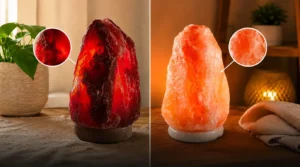
Weight, colour, glow and how it reacts to humidity — the checks that separate genuine rock salt from a convincing imitation.
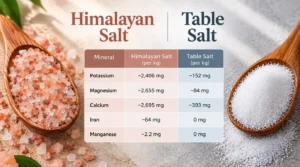
See which minerals Himalayan salt contains, how much of each is in a typical serving, and how its sodium content compares with table salt.
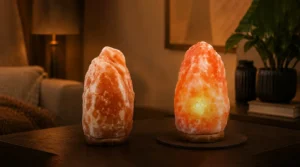
Salt lamps sweat, and the water has to go somewhere. Why a tray protects your furniture and what material works best.
Why Demaro Salt
Tell us what you need. Our team replies within 24 hours.