Anyone who’s added Himalayan salt blocks to their kitchen eventually asks the same question: how long will it actually last? The honest answer is that a salt slab doesn’t come with an expiration date — but it does come with a lifespan that depends entirely on how it’s used, heated, and stored.
Do Himalayan Salt Blocks Ever Expire?
The short answer is no. Himalayan salt doesn’t expire, since as a mineral it remains chemically stable indefinitely, and properly stored salt can be used for an unlimited amount of time. A pink salt slab is essentially a solid mineral, and minerals don’t spoil the way food does.
That said, “won’t expire” isn’t the same as “will look and perform the same forever.” A salt block left damp or stored in a humid environment can gradually soften, crack, or break down at the surface with repeated use. So while the salt itself never goes bad, the block’s structural condition absolutely can — and that’s really what determines how long a block stays usable.
Where Himalayan Salt Blocks Come From
Himalayan pink salt blocks are cut from massive deposits at the Khewra salt mines in Pakistan, one of the oldest and largest salt mines in the world. The rock salt extracted here formed millions of years ago and is prized for its density, mineral content, and the pink-to-white color variation that makes each slab slightly unique.
A reputable Himalayan salt manufacturer cuts these deposits into slabs, then polishes them into the smooth, food-safe surface used for cooking and serving. The quality of that initial cut and finish plays a real role in how long the block will hold up — a well-cut, evenly dense slab resists cracking far better than an inconsistent one.
How Long Does a Himalayan Salt Block Actually Last?
There’s no single number here, because usage patterns vary so widely. A Himalayan salt block, if used as directed and cared for properly, should last at least a year, and could last even longer with lighter use and good storage.
Frequency of use is the biggest factor. Himalayan salt blocks have a somewhat limited lifespan compared to traditional cookware, since continuous exposure to heat and moisture gradually wears them down, but monitoring how the block is used can meaningfully extend that lifespan. A block used occasionally for cooking but more often for serving will generally last longer than one used regularly for high-heat cooking, since cooking wears the slab down faster than serving does.
For Himalayan salt cooking blocks specifically, some gradual thinning is normal and expected. Because salt slowly leaches into food during cooking, the block will gradually decrease in thickness over time — this isn’t harmful, but it is a visible sign of the slab’s use over its lifetime. A slab used purely for chilled presentation, on the other hand, experiences far less wear and can remain in near-original condition for years.
What Shortens a Salt Block’s Lifespan
A few conditions consistently cause premature damage:
Moisture exposure. Keeping the block dry matters, since moisture can cause it to deteriorate over time. Any salt slab left wet or stored in a humid space is at far greater risk of surface breakdown than one that’s dried thoroughly after every use.
Sudden temperature changes. Avoiding sudden temperature swings — such as placing a hot pan on a cold block, or the reverse — helps prevent cracking or chipping. This is one of the most common ways a pink salt slab gets damaged early: rushing the heating or cooling process.
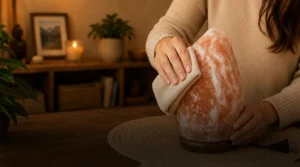
Improper cleaning. Cleaning is a delicate process; the block should never be scrubbed with soap or run through a dishwasher. Instead, it should be allowed to cool, wiped gently with a barely-moist sponge, and patted dry before being left to fully air-dry.
How to Extend the Life of Your Himalayan Salt Block
A few consistent habits make a real difference in how long Himalayan pink salt blocks stay functional:
- Heat and cool gradually. Slow, even temperature changes are the single best way to prevent cracking, whether the block is going on a stovetop, oven, or grill.
- Dry it completely after every use. Moisture is the main enemy of a salt slab’s surface, so full drying before storage matters more than almost anything else.
- Store it in a cool, dry place. A humid pantry or a spot near a sink shortens the block’s usable life considerably.
- Season it occasionally. Rubbing the block with a light coat of oil, such as olive or coconut oil, can help protect it from moisture and keep it looking fresh.
- Match usage to purpose. If a block is used heavily for high-heat searing, expect it to wear faster than one reserved for chilled serving.
What Happens When a Salt Block Finally Wears Down
Even with excellent care, a Himalayan salt cooking block used regularly for high-heat cooking will eventually thin out or develop cracks. This isn’t necessarily the end of its usefulness. If a salt block does crack, it can often still be used by breaking it into smaller pieces for smaller cooking or serving tasks rather than discarding it outright.
Some cracked or worn slabs remain functional for grilling or serving purposes even with minor surface defects, and many owners continue using them well past the point of “perfect” condition — the salt itself is still just as pure and usable, even if the shape has changed.
Choosing a Quality Block from the Start
Ultimately, the lifespan of any Himalayan salt block starts with where it came from. Slabs cut from dense, high-quality material sourced from the Khewra salt mines and finished by an experienced Himalayan salt manufacturer tend to resist cracking and hold their structure far better than lower-grade or unevenly cut alternatives.
When shopping for a pink salt slab, look for even coloring, a smooth and consistent surface, and enough thickness to withstand repeated heating cycles. A well-made block, paired with careful use and proper storage, can realistically serve a kitchen for years — proving that with a little care, this ancient mineral is built to last.
Conclusion
A Himalayan salt block never truly expires — it only wears with use. With gentle care, gradual heating, and dry storage, a quality pink salt slab from the Khewra salt mines can serve your kitchen for years, cracks and all.