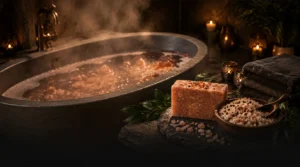
Scented and unscented Himalayan bath salts are two popular options in the bath and wellness market. A Himalayan salt bath is a bathing experience in which Himalayan pink salt is added to warm bathwater to create a simple bath soak. Both use Himalayan pink salt as their main ingredient, but they offer different bathing experiences. Scented varieties include added fragrances or essential oils, while unscented varieties keep the formulation simple and fragrance-free.
For spa owners, retailers, and wellness brands, the choice depends on customer preferences, product positioning, target markets, and the bathing experience they want to offer.
Understanding these differences can help brands build a more suitable bath salt range and make better product decisions.
Understanding the Difference Between Scented and Unscented Bath Salts
The main difference between scented and unscented Himalayan bath salts is the addition of fragrance ingredients.
Scented Himalayan Bath Salt
Scented bath salts combine Himalayan pink salt with fragrance oils or essential oils. These additions give the product a particular aroma and help create a more sensory bathing experience.
Popular fragrance options include:
- Lavender for a soft floral aroma.
- Eucalyptus for a fresh, herbal scent.
- Rose for a gentle floral fragrance.
- Lemon and citrus for a fresh, clean smell.
- Peppermint for a cool, minty aroma.
These varieties are commonly used in spa settings, relaxation-themed gift sets, and premium bath product collections.
Unscented Himalayan Bath Salt
Unscented bath salts contain Himalayan pink salt without added fragrance. They offer a simpler formulation for customers who prefer products without added scents.
They can also suit people sensitive to certain fragrances or who prefer a natural, straightforward bathing experience.
For retailers, unscented varieties offer an alternative to fragrance-based products and can appeal to customers who want fewer added ingredients.
Which Option Is Better for Spa and Wellness Businesses?
There is no single answer because each option serves different customer needs.
Scented bath salts can be a good choice for spas that want to create a particular atmosphere. For example, a spa may use lavender-scented products in its relaxation-themed packages or eucalyptus varieties in its fresh, herbal bathing collections.
They can also help retailers develop different product ranges based on fragrance preferences.
Unscented bath salts, on the other hand, suit businesses that want to offer a simpler option. They fit well in natural personal care collections, minimalist product ranges, and spa services where customers prefer no added fragrance.
A practical approach is to offer both varieties rather than limiting the entire product range to one option.
This gives customers more choice and allows businesses to serve different preferences.
Important Factors to Consider Before Choosing a Product
Before selecting scented or unscented Himalayan bath salt, spa owners and retailers should consider several factors.
1. Customer Preferences
Understand what your target customers want. Some customers enjoy floral and herbal fragrances, while others prefer unscented products.
Retailers serving premium wellness markets may benefit from offering several fragrance choices alongside a pure, unscented option.
2. Ingredient Quality
The quality of the base salt and added ingredients matters. Choose properly processed Himalayan pink salt with consistent grain size, color, and quality.
For scented varieties, pay attention to the fragrance materials or essential oils used in the formulation. Ask suppliers for relevant ingredient information and product documentation.
3. Fragrance Strength
A fragrance should complement the bathing experience, not overpower it. Strong scents may not suit every customer or every spa environment.
Before finalizing a formulation, consider fragrance strength, consistency, and suitability for the intended product.
4. Packaging and Storage
Packaging plays an important role in maintaining product quality.
Store bath salts in packaging that protects them from moisture and contamination. Common options include resealable pouches, sealed jars, and suitable retail containers.
For scented varieties, packaging should also help retain the fragrance during storage and transportation.
5. Target Market and Product Positioning
Consider where and how you’ll sell the product. A luxury spa collection may focus on attractive jars, carefully selected fragrances, and gift-ready packaging.
A general retail range may require different sizes, simple packaging, and affordable options.
Understanding your market helps determine which product combinations make commercial sense.
Can Himalayan Bath Salt Be Combined with Himalayan Salt Soap?
Yes. Himalayan bath salt and Himalayan salt soap can complement each other in a personal care and bath product collection.
Himalayan bath salt is typically used as a bath soak, while Himalayan salt soap is designed to cleanse the body.
Offering both products lets retailers and wellness brands create coordinated bath and body collections.
For example, a brand could introduce:
- Lavender-scented bath salt with matching soap.
- Rose-themed bath and body gift sets.
- Unscented bath salt with fragrance-free cleansing products.
- Mixed bath collections with different product sizes.
However, salt soap requires its own formulation and quality checks. Himalayan salt alone does not automatically make every soap suitable for every skin type.
Brands should consider the full formulation, ingredient compatibility, performance, and clear usage instructions.
Private Label Opportunities for Bath Salt Brands
For businesses planning to launch or expand a bath and wellness range, private labeling Himalayan salt products offers an opportunity to develop products under their own brand name.
Instead of setting up manufacturing facilities, retailers and spa businesses can work with an experienced manufacturer to source products in bulk or develop customized retail collections.
Some important areas to consider include:
- Product selection: Choose scented, unscented, or a mix.
- Fragrance options: Select fragrance profiles that suit your target market.
- Salt grades: Consider coarse, medium, or fine grain sizes depending on the intended product.
- Packaging: Select jars, pouches, bottles, or other suitable retail packaging.
- Branding: Develop your own labels, product names, and packaging designs.
- Quality documentation: Request relevant product specifications, ingredient details, and quality documents.
As a Himalayan salt manufacturer in Pakistan, Demaro Salt understands that different businesses have different product and packaging requirements. We support wholesale supply and private-label requirements for Himalayan salt products, helping businesses develop customized product ranges that match their target markets.
Whether you are planning to introduce pure Himalayan bath salt, scented varieties, or complementary bath products, choosing the right product specifications is an important first step.
Frequently Asked Questions
Is scented or unscented Himalayan bath salt better for sensitive skin?
Unscented bath salt avoids added fragrance, which may make it a better option for people sensitive to certain scents. However, fragrance-free does not automatically mean irritation-free. Individual skin sensitivity and the complete product formulation still matter.
What are the most popular fragrances for Himalayan bath salts?
Lavender, rose, eucalyptus, peppermint, and citrus are common fragrance choices. The best options depend on customer preferences and the type of bath and wellness collection a brand wants to develop.
Can retailers sell scented and unscented bath salts under the same brand?
Yes. Offering both varieties can help retailers serve customers with different fragrance preferences. They can also create separate product collections for spa use, everyday bathing, and gift sets.
What should businesses ask a manufacturer before ordering private-label Himalayan bath salts?
Ask about salt origin, product specifications, grain sizes, fragrance options, minimum order quantities, packaging choices, quality documentation, and export requirements. Also confirm that the proposed formulation and labeling meet your target market’s regulations.
Final Thoughts
Scented and unscented Himalayan bath salts both have a place in the bath and wellness market. Scented varieties offer fragrance choices, while unscented products provide a simpler alternative.
For spa owners and retail brands, the best approach is to understand customer preferences, select suitable ingredients, and choose packaging that supports the product’s intended market.
With the right product selection and a reliable manufacturing partner, businesses can develop a Himalayan bath salt collection that meets different customer needs and supports their brand growth.