Salt is a daily dietary staple, yet not all salts serve the same nutritional or commercial purpose. One of the most common questions from consumers and food buyers alike is whether Himalayan salt is iodized—and how it compares with iodized table salt. This guide explains the differences clearly, from health considerations to B2B procurement decisions.
What Is Iodized Salt?
Iodized salt is refined salt that has iodine added to it as a public health measure. Iodine is an essential micronutrient required for normal thyroid function and metabolic regulation.
Why Iodization Exists
Iodization was introduced to address widespread iodine deficiency in many populations.
- Supports healthy thyroid hormone production
- Helps prevent iodine deficiency disorders
- Widely recommended for everyday household use
How Salt Is Iodized
Iodine is added during processing in controlled amounts, usually in the form of:
- Potassium iodide
- Potassium iodate
This ensures consistent iodine levels across batches.
What Is Non-Iodized Salt?
Non-iodized salt contains no added iodine. It may be refined or minimally processed, depending on the source.
Common Types of Non-Iodized Salt
- Sea salt
- Kosher salt
- Rock salt
- Himalayan salt
Why Some Users Prefer Non-Iodized Salt
- Preferred for specific culinary or industrial applications
- Stable in high-temperature food processing
- Chosen where iodine intake comes from other dietary sources
Is Himalayan Salt Iodized?
This is the core question—and the answer is straightforward.
Natural Iodine Content in Himalayan Salt
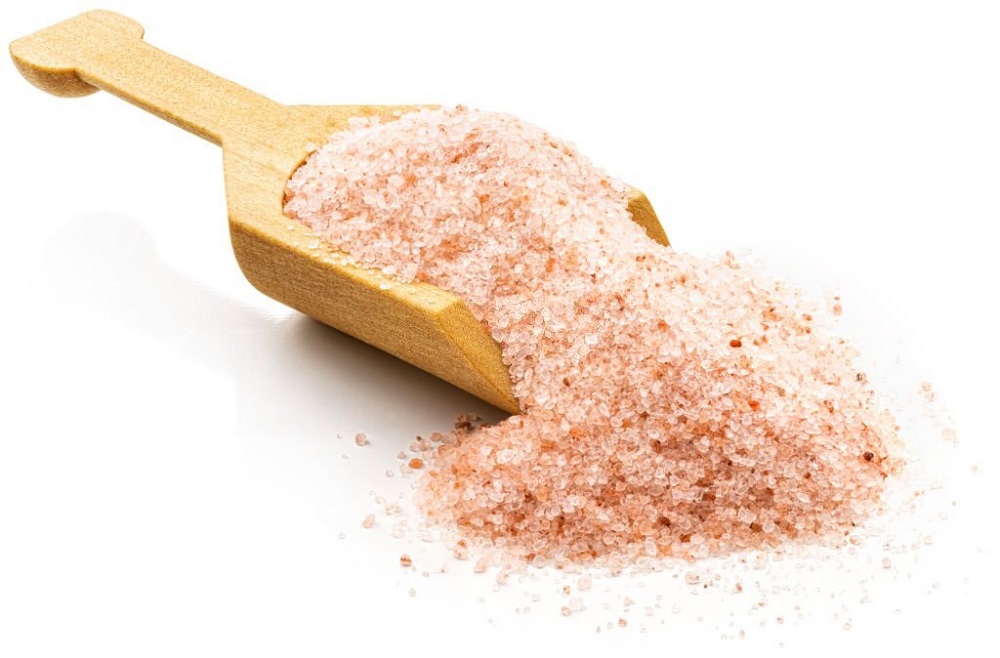
Himalayan salt is naturally non-iodized. While it contains trace minerals, the naturally occurring iodine content is extremely low and not nutritionally significant.
- Not a reliable iodine source
- Mineral content varies naturally
- No standardized iodine level
Can Himalayan Salt Be Iodized?
Yes. Himalayan salt can be iodized during processing if required by regulation or buyer specification.
This is common for:
- Retail markets with mandatory iodization laws
- Private-label food brands
- Government or institutional supply contracts
How to Identify Iodized Himalayan Salt
- Clearly labeled as “iodized”
- Nutritional panel lists iodine content
- Supplier provides iodine test reports
Iodized vs. Non-Iodized Salt: Key Differences
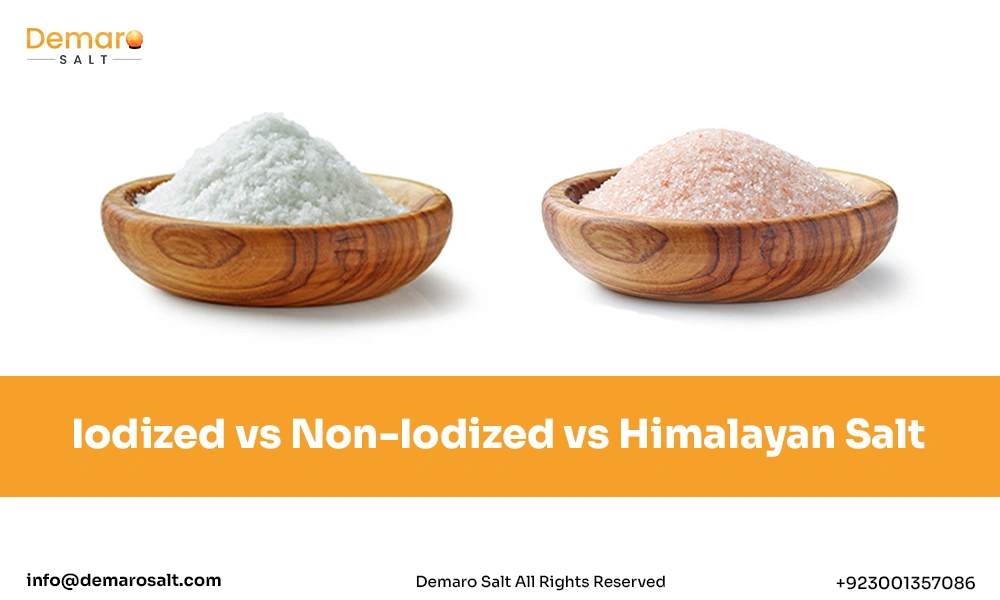
Below is a quick comparison to help readers scan and decide.
Iodized and Himalayan Salt Comparison
| Feature | Iodized Table Salt | Non-Iodized Salt | Himalayan Salt |
| Added Iodine | Yes | No | No (by default) |
| Natural Minerals | Minimal | Varies | Present |
| Processing Level | Highly refined | Refined or natural | Minimally processed |
| Nutritional Role | Iodine intake | Neutral | Trace minerals only |
| Common Use | Household cooking | Processing, specialty use | Culinary, wellness, décor |
| Can Be Iodized | Already iodized | Yes | Yes (on request) |
Health Implications of Iodized vs Non-Iodized Salt
Understanding health impact is important—but especially for product positioning.
Why Iodine Matters
- Essential for thyroid hormone production
- Supports metabolism and growth
- Deficiency can cause long-term health issues
Himalayan Salt and Iodine Intake
Using only non-iodized Himalayan salt without other iodine sources may not meet dietary needs.
Best practice:
- Combine with iodine-rich foods
- Or choose iodized salt for daily cooking
Salt Selection for Commercial Use
For manufacturers, importers, and food brands, salt choice goes beyond nutrition.
Procurement Considerations
- Target market regulations (mandatory iodization in many countries)
- Product application (baking, processing, seasoning)
- Shelf-life and iodine stability
Regulatory & Compliance Factors
- Iodine level standards vary by country
- Accurate labeling is legally required
- Documentation and lab testing are often mandatory
Supplier Evaluation Checklist
- Ability to supply iodized and non-iodized variants
- Consistent iodine fortification (if required)
- Bulk packaging and private-label readiness
- Quality control and traceability
Product Differentiation & Market Opportunities
Himalayan salt offers flexibility for brand positioning.
Private-Label Opportunities
- Iodized Himalayan salt for regulated markets
- Non-iodized variants for premium or specialty use
Market Positioning Options
- Nutritional compliance focus
- Culinary and mineral profile focus
- Export-ready packaging and labeling
This flexibility makes Himalayan salt attractive for diversified product portfolios.
How to Choose the Right Salt
For Household Use
- Iodized salt for daily cooking
- Himalayan salt as a complementary option
For Food Processing
- Choose based on recipe stability and regulations
- Iodized or non-iodized as per product need
For Importers & Buyers
- Verify market-specific iodization laws
- Work with suppliers offering customization and documentation
Frequently Asked Questions
Does Himalayan salt naturally contain iodine?
Only in trace amounts, not enough to meet dietary needs.
Can Himalayan salt be iodized?
Yes, during processing, upon request.
Is iodized salt better than Himalayan salt?
They serve different purposes; the choice depends on nutritional needs and application.
Conclusion
Himalayan salt is naturally non-iodized and valued for its mineral profile, while iodized salt plays a critical role in meeting dietary iodine requirements. For consumers, balance is key. For B2B buyers, the right choice depends on regulation, application, and market positioning. Understanding these differences ensures informed decisions—both nutritionally and commercially.