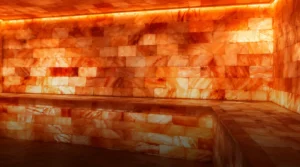
Himalayan salt therapy is a wellness practice associated with salt-rich environments and, in some settings, the inhalation of fine salt particles. Wellness centers, spas, and specially designed salt rooms featuring pink salt walls, crystal-covered floors, and soft lighting offer it.
But how does salt therapy work? What does research say about its benefits? And how are Himalayan salt products used in these spaces? Here is what you need to know.
Understanding Salt Therapy & Halotherapy
Salt therapy, also known as halotherapy, involves exposure to salt-rich environments or, more specifically, inhalation of fine salt particles during dry salt therapy sessions. The practice draws inspiration partly from natural salt caves and mines.
Modern facilities recreate aspects of these environments using Himalayan pink salt and, in some cases, specialized equipment. However, a decorative salt room and an active halotherapy room are not the same.
How Do Active and Passive Salt Rooms Work?
Active and passive salt rooms differ in whether they disperse salt particles into the air.
Active salt rooms use a halogenerator to grind suitable salt into fine particles and distribute them throughout the room. Visitors sit or relax while breathing the salt-containing air.
Passive salt rooms feature decorative salt installations without equipment that disperses salt particles. They may include illuminated walls, crystal-covered floors, and comfortable seating to create a peaceful atmosphere.
The main difference is the room’s function: decorative salt features alone do not provide active halotherapy or offer any specific health benefits.
What Are the Potential Benefits of Salt Therapy?
Salt therapy is promoted for respiratory comfort, skin health, and relaxation, but scientific evidence supporting these claims remains limited.
- Respiratory health: Some proponents suggest inhaled salt particles may help clear mucus. However, strong evidence is insufficient to establish halotherapy as an effective treatment for asthma, chronic obstructive pulmonary disease (COPD), or other respiratory conditions.
- Skin health: Some providers promote salt therapy for eczema and dry skin, but reliable evidence confirming these benefits is lacking.
- Relaxation: A quiet room with warm lighting and comfortable seating can provide a pleasant setting for unwinding. However, relaxation does not prove that salt itself delivers a medical benefit.
Salt therapy should not replace prescribed medication, professional medical advice, or established treatment plans.
Which Himalayan Salt Products Are Used in Salt Rooms?
Himalayan salt products are used in salt-room construction and interior design because of their natural colors, distinctive textures, and decorative appeal. Each product serves a different purpose.
Salt Bricks for Decorative Walls
Salt bricks are used to construct feature walls, partitions, and backlit surfaces. Their pink, orange, and amber tones create a warm visual effect, making them popular in spas, wellness centers, and selected interior-design projects.
However, salt bricks alone do not create the conditions required for active halotherapy.
Himalayan Salt Crystals for Decorative Features
You can incorporate Himalayan salt crystals into designated floor areas and other decorative installations. Their natural shapes and color variations help create a cave-inspired appearance.
For commercial projects, buyers should consider crystal size, cleanliness, grading, packaging, and suitability for the intended installation.
Salt Lamps for Ambient Lighting
Salt lamps are carved from natural rock salt and lit from within. People commonly use them in relaxation rooms, spas, bedrooms, and other interiors.
Their soft glow complements a salt room’s atmosphere. However, strong scientific evidence does not show that salt lamps meaningfully purify indoor air, improve respiratory health, or treat medical conditions. They are decorative lighting products, not substitutes for halotherapy equipment.
Bulk Himalayan Salt for Commercial Projects
Bulk Himalayan salt matters for businesses developing salt rooms and wellness interiors that need larger quantities of bricks, crystals, or other salt products.
Before purchasing, commercial buyers should evaluate:
- Product specifications: Dimensions, crystal size, grading, and color variation.
- Packaging and transport: Protection against moisture, breakage, and shipping damage.
- Installation requirements: Suitable adhesives, structural support, and electrical safety for illuminated features.
- Environmental conditions: Humidity control and maintenance, because salt can absorb moisture.
Choosing products according to the project’s design and installation requirements helps create attractive, practical salt interiors.
Is Himalayan Salt Therapy Safe?
Some people may tolerate Himalayan salt therapy, but inhaling airborne salt can irritate the airways, cause coughing, or worsen symptoms in people with asthma or other respiratory conditions.
Before attending a session, consider these precautions:
- Consult a healthcare professional if you have asthma, COPD, or another respiratory condition.
- Continue prescribed medications and do not substitute salt therapy for medical treatment.
- Choose a reputable facility and ask about its equipment, cleaning procedures, and operating practices.
- Stop the session if you experience breathing difficulty or significant irritation, and seek appropriate medical advice.
Salt-room operators should also maintain appropriate humidity levels and follow proper cleaning and maintenance procedures to protect the salt installations.
Frequently Asked Questions
Is Himalayan salt therapy scientifically proven?
Evidence supporting halotherapy for respiratory and skin conditions remains limited. Some studies suggest potential benefits, but stronger clinical research is needed. It is not a proven medical treatment.
What is the difference between a salt room and a salt cave?
A natural salt cave is an underground environment, while a modern salt room recreates some of those features. Active salt rooms use a halogenerator to disperse fine salt particles; passive rooms mainly provide a salt-themed environment.
Do salt bricks and salt lamps provide halotherapy?
No, not by themselves. Salt bricks and lamps enhance a room’s appearance, but they don’t replace the equipment that disperses fine salt particles during active halotherapy. Salt lamps also lack strong evidence for air-purifying effects.
Which Himalayan salt products are used in salt-room construction?
Salt bricks are commonly used for walls, Himalayan salt crystals for decorative features, and salt lamps for ambient lighting. The right materials depend on the design, installation method, humidity conditions, and intended use.
Conclusion
Himalayan salt therapy combines salt-based environments with, in some facilities, the inhalation of fine salt particles. Although some people enjoy these spaces for relaxation, their medical benefits remain uncertain and require further research.
For wellness businesses and interior designers, Himalayan salt bricks, crystals, and lamps offer distinctive decorative possibilities. Understanding their uses and selecting suitable materials helps create attractive salt rooms without relying on unsupported health claims.