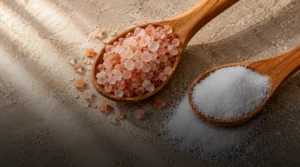
Kosher salt and Himalayan salt are both mainly sodium chloride, but they differ in origin, color, crystal shape, texture, and common uses. Kosher salt is usually white and coarse, while Himalayan salt is pink rock salt mined in Pakistan. Their trace mineral content also differs.
If you ask what rock salt is, it is a natural salt formed from ancient salt deposits and found in solid rock layers.
What is Kosher Salt?
Kosher salt is an edible, coarse-grained salt made primarily of sodium chloride. It’s widely used for cooking and seasoning.
The name ‘Kosher’ comes from the Jewish practice of koshering meat, where coarse salt was traditionally used to draw moisture and blood from the meat. Larger Flaky crystals are also easy to pinch and spread by hand. It’s harvested by evaporating seawater into large white crystals.
What is Himalayan Pink Salt?
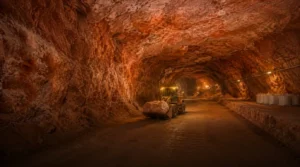
Himalayan pink salt is a natural rock salt. It’s mined from ancient salt deposits in the Khewra Salt Mines. Other large salt mines in Punjab, Pakistan, are natural and ancient sources of pink salt.
Its pink color comes from small amounts of minerals and trace elements present naturally in it rock salt crystals. Its mild salty taste, natural pink color, and range of grain sizes make it popular for cooking, seasoning, and various salt products.
Difference between Kosher Salt & Himalayan Pink Salt
Kosher salt and Himalayan salt are two
types of salt, along with table salt and Sea salt. We use both salts, i.e., Kosher & Himalayan, in cooking, but they differ in their origin, appearance, crystal structure, and mineral content. Here’s a quick comparison of their key differences:
Feature | Kosher Salt | Himalayan Pink Salt |
Source | Salt deposits or seawater, depending on the producer | Ancient salt deposits in Pakistan |
Color | Usually white | Naturally pink, from light to deeper shades |
Crystal Structure | Larger, lighter crystals | Available in fine to large crystals |
Mineral Content | Mainly sodium chloride | Sodium chloride with naturally occurring minerals and trace elements |
Common Uses | Cooking and seasoning | Cooking, seasoning, and various salt products |
Flavor | Clean, straightforward salty taste | Mild, subtle salty taste |
Minerals and Sodium Content
Both Kosher salt and Himalayan pink salt are made mostly of sodium chloride. They both provide a similar amount of sodium by weight. The main difference is that Himalayan salt naturally contains small amounts of minerals and trace elements. Iron, magnesium, and potassium are the most common minerals, which also give it its pink color.
Kosher salt usually has a more uniform composition and contains very little of these trace minerals. Himalayan salt is less processed and keeps some of the minerals found in the original salt deposit. However, these minerals are present in small amounts and should not be seen as a major source of nutrition.
The amount of sodium chloride can also change when measured by volume. Because Kosher salt crystals can be larger and less tightly packed. One teaspoon may contain less sodium than one teaspoon of a denser salt. For a fair comparison, compare sodium by weight rather than by teaspoon.
Kosher Salt Mineral Composition
Unlike Himalayan rock salt, Kosher salt does not get its typical appearance or character from trace minerals. Its mineral content is generally less varied.
For this reason, the actual mineral content can differ from one product to another. The exact mineral composition can vary by kosher salt brand and source. Therefore, checking the product’s specifications or laboratory analysis is the best way to know its actual mineral content.
Himalayan Salt Mineral Composition
The exact mineral content can vary depending on the salt deposit and where the salt is mined. Different Himalayan salt products may therefore have slightly different mineral compositions. Laboratory analysis is the best way to know the actual mineral content of a particular Himalayan salt product. That tells you how much of each mineral it contains.
Best Uses of Kosher Salt and Himalayan Salt
Both salts work well for everyday cooking, seasoning, and food preparation. However, their different crystal forms and characteristics make them better suited to certain uses.
Best Uses for Kosher Salt
Kosher salt is widely used for everyday cooking and seasoning. Its larger crystals make it easy to control when adding salt by hand. It works well in soups, sauces, pasta water, vegetables, meat, fish, and other everyday dishes.
It is also commonly used for dry and wet brining, curing, pickling, and preparing meat for grilling or smoking.
Best Uses for Himalayan Salt
You can use Himalayan pink salt much like other cooking salts. Fine Himalayan salt works well for everyday seasoning, meat, seafood, salads, and other dishes. You can also add it during cooking to bring out the food’s natural flavors.
Use larger Himalayan salt crystals as a finishing salt. They add a mild salty taste and a slight crunch to cooked food. The natural pink color can also add visual appeal when sprinkled over salads, vegetables, grilled foods, and other dishes.
Himalayan pink salt is also available in cooking slabs or serving blocks. You can heat them to cook food like meat, seafood, and vegetables, or chill them to serve cold foods.
Beyond culinary uses, Himalayan salt is made into bath salts, body scrubs, salt lamps, and other decorative items. These pink salt products use salt mainly for its natural appearance and texture.
FAQs
Is Himalayan salt saltier than Kosher salt?
Not necessarily. Both are mainly sodium chloride, so their saltiness is broadly similar. The difference you notice can come from crystal size, texture, and how much salt is used in a recipe.
Does Kosher salt or Himalayan salt contain iodine?
Neither salt naturally contains significant added iodine. Some Kosher or Himalayan salt products may be iodized, so check the product label. Himalayan salt may contain naturally occurring trace iodine, but the amount can vary.
Can I use Himalayan salt instead of Kosher salt?
Yes, Himalayan salt can usually replace Kosher salt in cooking, but you may need to adjust the amount. Different crystal sizes have different densities, so it is better to compare by weight rather than by volume.
Is pink salt the same as Himalayan salt?
Not always. Himalayan salt is a type of pink rock salt associated with salt deposits in Pakistan. However, “pink salt” is a broader term that can refer to other pink-colored salts.
Conclusion
Kosher salt and Himalayan pink salt are both useful for everyday cooking, but they differ in origin, crystal structure, mineral composition, and appearance. Kosher salt is valued for easy seasoning and food preparation. Himalayan salt offers a natural pink color, different crystal sizes, and a range of culinary and other uses. The right choice depends on the dish, recipe, and personal preference.